February 17, 2026 · 2 min read
Why we moved our hypervisors from NixOS to Proxmox VE
We ran our hypervisors on NixOS for the sake of declarative configuration. Proxmox VE, its backup server, and its support, together with AI agents that help manage our configuration, have made us faster for our cloud tenants.
We have moved our hypervisors from NixOS to Proxmox VE. The change has shortened the time it takes us to act on tenant requests.
Why we chose NixOS
We wanted declarative configuration. With NixOS every host and every virtual machine was defined in our configuration repository, a rebuild produced the same system every time, and a bad change could be rolled back by booting the previous generation. For a small team that runs its own network, those are attractive properties, and we still think Nix is excellent at them.
What it cost us
Every change had to go through the Nix language. Adding a tenant network or resizing a disk meant editing modules and then debugging evaluation errors that pointed far from the line we had changed. Requests that should have taken minutes took much longer, and tenants waited for them.
Backups were the larger problem. Nothing in our setup handled them for us, so we maintained our own scripts, and restoring a tenant’s machine was a procedure we did not want to run under pressure.
We were spending more time maintaining the platform than improving the service our tenants use.
What Proxmox gives us
Proxmox VE runs KVM virtual machines and containers across a cluster, with a web interface and an API for everything the interface can do. Moving a machine between nodes or creating a tenant network is now routine work.
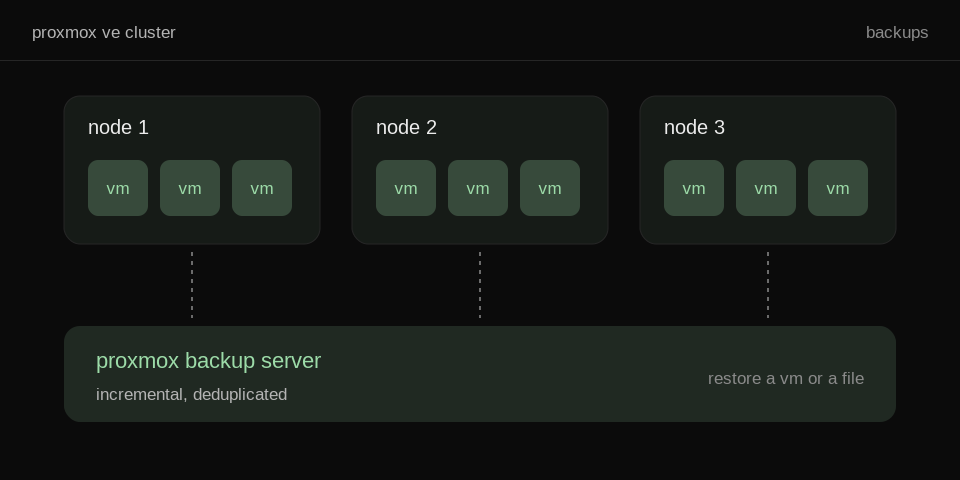
Proxmox Backup Server takes incremental, deduplicated backups of every machine on a schedule, and a restore can bring back a whole virtual machine or a single file from inside one. We now restore whenever a tenant asks, without planning around it.
We also pay for a Proxmox support subscription. When we hit a problem below our own configuration, there is a vendor who knows the code to ask, and the enterprise repository gives us updates that have had more testing.
Configuration management
We still keep configuration in a repository. Our cluster, network, and tenant definitions live in version control, and changes reach the cluster through the Proxmox API.
AI agents help us manage that configuration. They draft changes and apply them through the API after an engineer has reviewed each one. A request that used to mean a session with Nix modules is now a reviewed change that goes out the same day.
The result for tenants
New machines are ready sooner, and backups and restores no longer depend on scripts that only we understood. Our tenants notice the shorter turnaround, and our engineers spend their time on the network and the service again.
If you want to run workloads on our network, email [email protected].
- Infrastructure
- Cloud