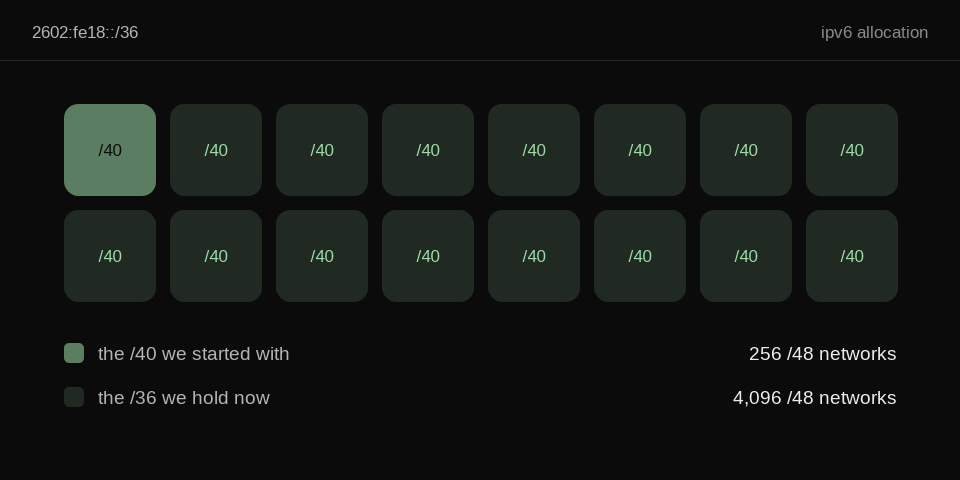
Dual-stack networks are the future
We expanded our IPv6 allocation from a /40 to a /36 and run our network dual-stack. An IPv4-only network is a dead end, and NAT64 is the right way to retire IPv4 from client networks.
Read post
We expanded our IPv6 allocation from a /40 to a /36 and run our network dual-stack. An IPv4-only network is a dead end, and NAT64 is the right way to retire IPv4 from client networks.
Read post
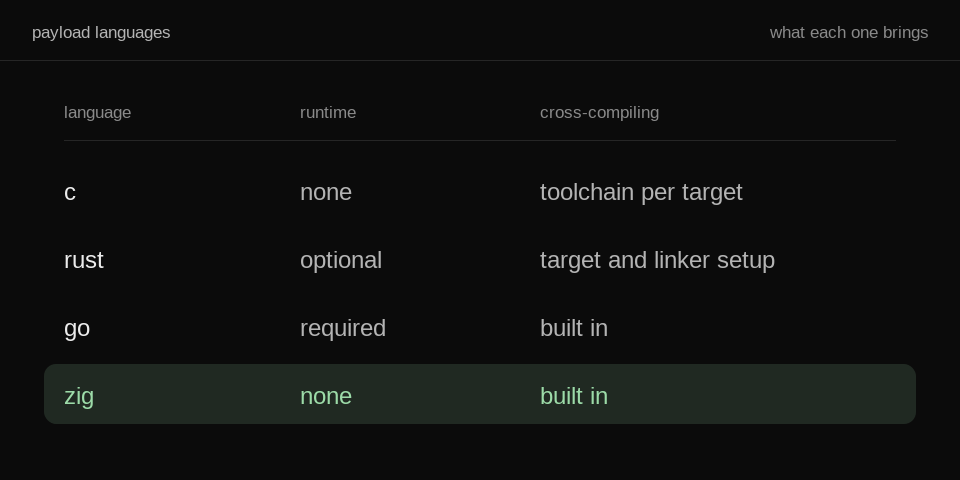
We compared several languages for our own red team tooling and settled on Zig for shellcode, stagers, and command and control payloads.
Read post
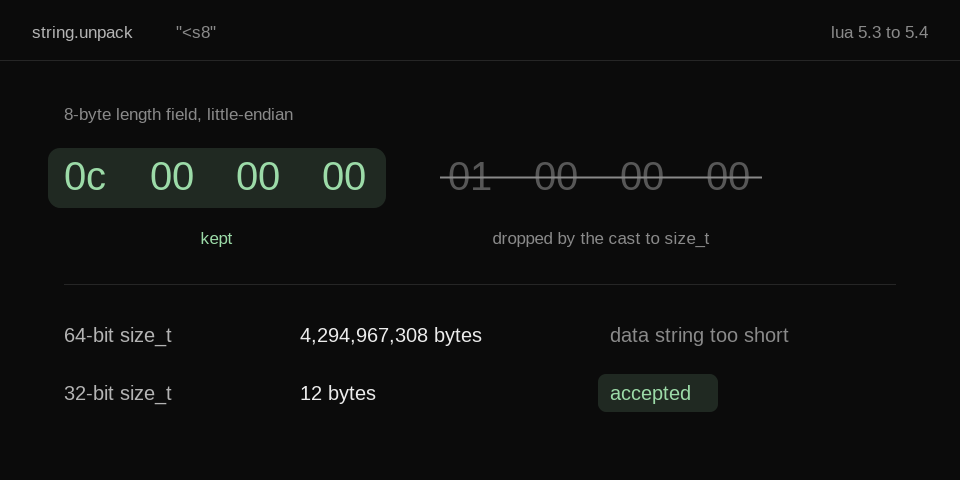
While sponsoring UIUCTF 2026 we found that string.unpack truncates 64-bit lengths on 32-bit builds of Lua 5.3 and 5.4.
Read post
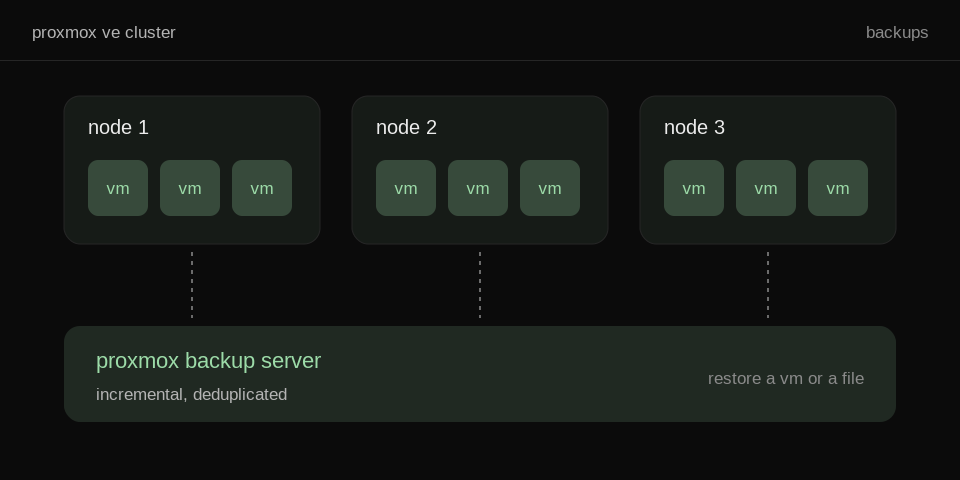
We ran our hypervisors on NixOS for the sake of declarative configuration. Proxmox VE, its backup server, and its support, together with AI agents that help manage our configuration, have made us faster for our cloud tenants.
Read post
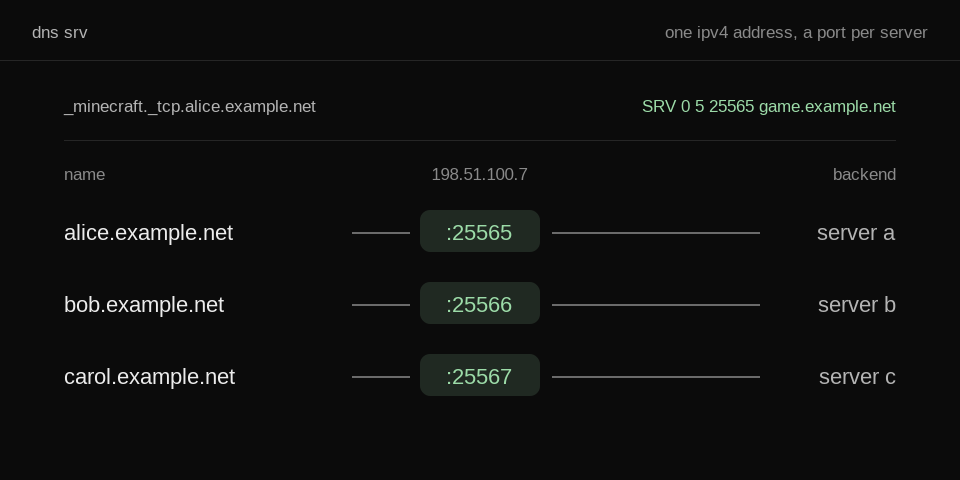
A DNS SRV record lets a name carry a port, so many self-hosted game servers can share one IPv4 address. Minecraft shows how well this works, and a reverse proxy can take it further.
Read post
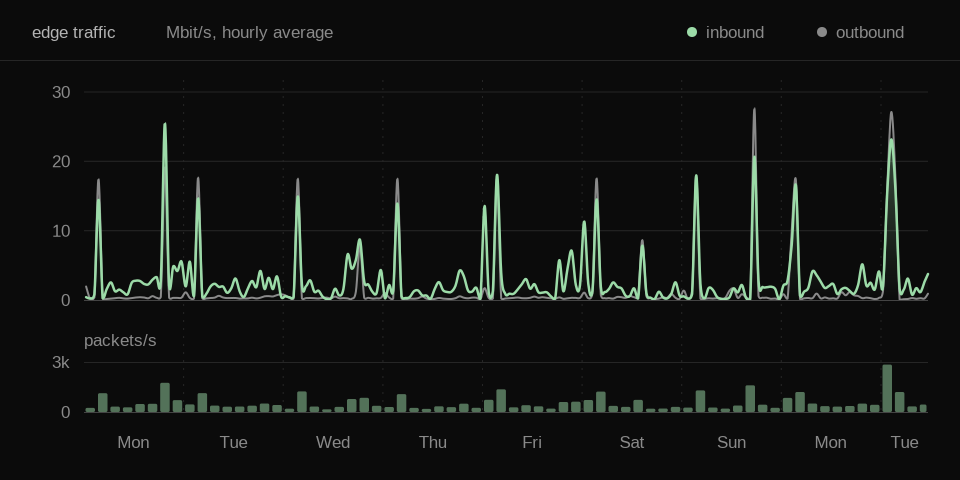
The network we built for our own research is now open to customers, with routing and cloud hosting on address space we run ourselves.
Read post